.png)
About Bulgaria
Bulgaria spent thirteen months doing what usually takes a decade: full Schengen membership on January 1, 2025, the euro on January 1, 2026, and a digital nomad visa opened December 20, 2025, which together turned the EU's cheapest country into its most interesting new base. The arithmetic is simple and startling: eurozone banking, border-free Schengen movement, the union's lowest costs, a 10 percent flat tax, and a purpose-built nomad scene that was famous before the paperwork caught up.
The visa, precisely: the new residence category written into the Law on Foreigners opened for applications December 20, 2025, and it asks one of three qualifications, remote employment with a company registered outside the EU, EEA and Switzerland, ownership of at least 25 percent of a foreign company you draw income from, or freelancing with at least twelve months' documented service to non-Bulgarian clients, plus income of 50 times the monthly minimum wage, roughly 31,000 euros a year on current figures. The mechanics run in two stages: a Type D long-stay visa at a Bulgarian embassy or consulate abroad, 100-to-120 euros and commonly 30-to-45 days, then entry and a residence-permit filing with migration authorities within 14 days, against apostilled criminal records, sworn Bulgarian translations, accommodation proof, bank statements and insurance valid across Bulgaria and Schengen, yielding a one-year residence card renewable for a second. It is, by the honest arithmetic, the fastest legal route into the eurozone a non-EU remote worker currently has.
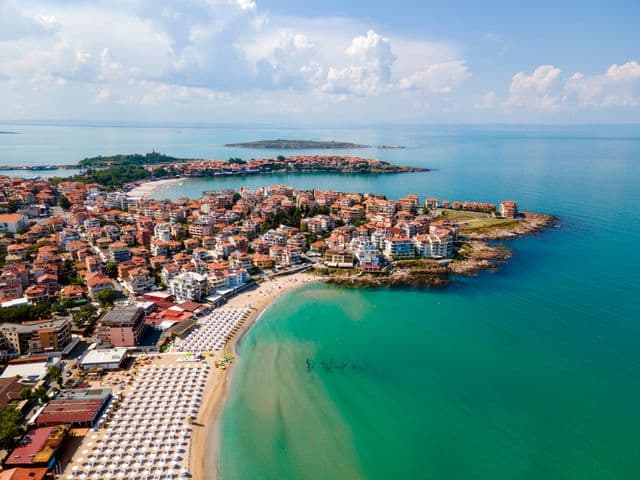
The country earns the paperwork on value alone. Bansko, the Pirin ski town two hours from Sofia, became Europe's most famous purpose-built nomad base years before the visa existed, its coworking pioneers and the world's largest nomad festival each June turning a lift-town into a year-round community; Sofia runs a genuine capital economy with Vitosha mountain rising from its tram lines; Plovdiv layers a Roman theater under Europe's oldest continuously inhabited streets; and the Black Sea coast at Varna and Burgas runs a summer season at prices the Mediterranean forgot decades ago. The two ends of the calendar hire too: Bansko and Borovets staff up for the ski winter, and the Black Sea season at Sunny Beach and Golden Sands has employed young Europeans by the busload for decades, EU passports walking in and everyone else arriving on an employer's paperwork. The frame: the union's lowest living costs with one-bedrooms in Sofia at 400-to-650 euros, the 10 percent flat tax that has drawn European freelancers for years, a calm advisory register whose practical content is Sofia taxi games and mountain-road winters, EU-standard infrastructure with fast fiber as a point of national pride, and the euro transition's only real footnote being that prices now read in the currency your clients pay you in. The honest caveats: administrative practice around the brand-new visa is still settling, sworn-translation bureaucracy is real, and English thins fast outside Sofia and the nomad hubs, which is exactly what keeps the prices where they are.
Widening the search? If you are looking to expand your job hunt across Balkans, take a look at Romania →, Greece →, and Serbia →.
Cost of living
Bulgaria prices as the European Union's floor and delivers over it: Sofia one-bedrooms run 400 to 650 euros monthly in the neighborhoods professionals want, the center, Lozenets, the Vitosha-facing south, with Plovdiv a step lighter, Bansko's nomad stock running 300-to-500 with ski-season swings, and the Black Sea coast pricing summer up and the rest of the year down. The euro transition completed January 2026 means prices now read directly in the currency most remote income arrives in, and the lev's fixed-rate history made the switch arithmetic rather than inflationary drama, though menu-rounding grumbles are the national sport this year.
Daily life runs delightfully light: the banitsa-and-boza breakfast costs pocket change, lunch menus feed honestly at 6-to-9 euros, the kafene espresso runs 1.50-to-2.50, shopska salad and grilled everything price the national table kindly, and the produce markets, Sofia's Zhenski Pazar foremost, run Balkan abundance at Balkan honesty. The practical lines: Sofia's metro-tram-bus network is cheap and genuinely good, intercity buses and trains price the small country at nearly nothing, the Vitosha lifts and Bansko passes run a fraction of Alpine rates, and gigabit fiber, a point of national pride, runs 10-to-15 euros. The comfortable single professional life assembles at 1,300 to 1,700 euros in Sofia, lighter in Plovdiv and Bansko, the budget floor sits near 950 with lunch-menu discipline, and the honest Bulgarian additions are the ski-pass line that suddenly fits the budget, the sworn-translation fees the paperwork demands once, and the euro-era rounding watch that locals will happily grumble about with you.
- Bank the EU floor consciously: Sofia one-bedrooms at 400-to-650 euros and lunch at 6-to-9 buy union-lowest living inside Schengen and the eurozone; the value is the entire national pitch.
- Price Bansko by season: nomad stock at 300-to-500 swings with the ski calendar, the June festival spikes short-term rates, and the shoulder months are the arbitrage.
- Ride the transit and the lifts: Sofia's network is cheap and good, intercity travel costs nearly nothing, and mountain passes at a fraction of Alpine rates are the lifestyle line the budget finally allows.
- Budget the paperwork's one-time lines: apostilles, sworn Bulgarian translations and notarizations are real fees the visa file demands once; they are the entry toll, not the running cost.
Cost-of-living calculator
See how your budget stretches in Bulgaria.
Estimates use approximate exchange rates and typical monthly costs. Your actual costs will vary.
Visas & Entry
Bulgaria's system now runs three doors and all of them matter: Schengen entry, an EU-citizen lane, and the brand-new nomad visa. Entry first: since January 1, 2025 Bulgaria is a full Schengen member, so non-EU visitors run the standard 90-in-180 arithmetic shared with the entire zone, no separate Bulgarian allowance, and the days spent here count against the same clock as Paris or Lisbon; EU, EEA and Swiss citizens simply register residence after three months, the union's ordinary freedom.
The headline door opened December 20, 2025: the digital nomad residence category, written into the Law on Foreigners, for non-EU remote workers earning from outside Bulgaria. The three qualifying lanes: remote employees under contract with companies registered outside the EU, EEA and Switzerland; business owners holding at least 25 percent of a foreign company they draw income from; or freelancers with at least twelve months' documented service to non-Bulgarian clients. The income bar sits at 50 times the monthly minimum wage, roughly 31,000 euros a year on current figures, and the mechanics run in two stages, a Type D long-stay visa at a Bulgarian embassy or consulate abroad, 100-to-120 euros standard and commonly 30-to-45 days, then entry and a residence-permit filing with migration authorities within 14 days of arrival, against the full documentary stack: apostilled criminal-record certificate, sworn Bulgarian translations of every foreign document, accommodation proof, bank statements, and health insurance valid across Bulgaria and the Schengen zone. The permit issues for one year and renews for a second while eligibility holds, and the honest caveat is the newness itself: administrative practice is still settling around the category, so the law-firm-assisted file is the common first-year choice. The adjacent lanes persist: the freelance and trade-representative Type D routes that carried remote workers before the new category, employer sponsorship for Bulgarian employment, and the EU long-term residence ladder at five years for those who stay. The summary is the pitch: the fastest legal route into the eurozone a non-EU remote worker currently has, at the union's lowest price of admission.
- Run the Schengen clock consciously: Bulgaria's days now count against the zone-wide 90-in-180, the pre-2025 separate allowance is gone, and the nomad visa is the answer once the clock binds.
- Pick your qualifying lane and document it to standard: the employment contract, the 25-percent ownership papers, or the twelve-month freelance track record; the lane determines the file.
- Build the documentary stack early: apostilled criminal records and sworn Bulgarian translations take weeks to assemble, the 14-day post-arrival filing window is real, and arriving with the stack complete is the entire technique.
- Expect settling-in friction and price it: the category is months old, administrative practice varies by office, and the law-firm-assisted file is the common first-year choice worth its fee.
- Meet the income bar cleanly: 50 times the minimum wage, roughly 31,000 euros, documented through contracts and statements; the formula moves with the wage, so check the current figure at filing.
- Remember what the permit buys: eurozone banking, Schengen residence, the 10 percent flat tax once resident, and the renewal into year two; the union's cheapest full membership in practice.
| Visa or permit | What it covers |
|---|---|
| Schengen entry, 90 in 180 | Full Schengen membership since January 1, 2025: non-EU visitors run the zone-wide 90-in-180 clock with no separate Bulgarian allowance, and days here count against the same arithmetic as the rest of the zone. |
| The Digital Nomad residence category | Opened December 20, 2025 under the Law on Foreigners: one year renewable for a second, for non-EU remote workers earning from outside Bulgaria, at 50 times the monthly minimum wage, roughly 31,000 euros a year. |
| The three qualifying lanes | Remote employment with a company registered outside the EU, EEA and Switzerland; ownership of at least 25 percent of a foreign company; or freelancing with twelve-plus months' documented service to non-Bulgarian clients. |
| The two-stage mechanics | A Type D long-stay visa at an embassy abroad, 100-to-120 euros and commonly 30-to-45 days, then a residence-permit filing within 14 days of arrival: apostilles, sworn translations, accommodation, bank statements and Schengen-valid insurance. |
| The EU-citizen lane | EU, EEA and Swiss citizens live and work freely, registering residence after three months; the union's ordinary freedom, now with eurozone banking attached. |
| The legacy Type D routes | The freelance and trade-representative lanes that carried remote workers before the new category persist beside it; established files sometimes still run these rails. |
| The long ladders | Bulgarian employment through employer sponsorship, EU long-term residence at five years, and the citizenship track beyond; the nomad category is the entry, not the ceiling. |
Good to know: DNV = TRUE, applications opened DEC 20 2025 (new residence category in Law on Foreigners, Art. 24(1)(23) ЗЧРБ), operative from Jan 1 2026: 1 yr + renewable once (2 yrs max on this category); income = 50× monthly minimum wage ≈ €31,010/yr (formula moves w/ wage; some early reports €27,500; law-firm figure €31,010 on €620 wage); THREE LANES: (1) remote employee of company outside EU/EEA/CH, (2) ≥25% owner of foreign company, (3) freelancer w/ 12+ months documented non-Bulgarian clients; mechanics: Type D at embassy (€100-120, ~30-45 days; €200 expedited) → enter → 14 DAYS to file residence permit (apostilled criminal record, SWORN Bulgarian translations, accommodation, bank statements, insurance valid Bulgaria + Schengen); admin practice STILL SETTLING (law-firm-assisted file = common). SCHENGEN: FULL member Jan 1 2025 (air/sea Mar 2024) → zone-wide 90/180, no separate BG allowance. EURO: Jan 1 2026, 21st member (lev transition complete Jan 31 2026) → currency_code EUR. EU long-term residence at 5 yrs. Legacy freelance/trade-rep Type D lanes persist.
EnRoute Jobs AI tool
Route Planner
Map visa routes, timelines, and relocation costs for your next destination.
Work & Legal
Bulgarian professional culture runs Balkan directness under EU process: meetings open with real coffee and real talk, hierarchy is respected but flat enough that the good argument travels, the handshake culture is firm and eye-contact honest, and the famous head-gesture inversion, the nod historically meaning no and the shake meaning yes, has faded among the young and internationalized but survives enough in the countryside to keep visitors humble. The economy's remote-relevant core is real: Sofia runs the EU's most cost-effective IT-and-outsourcing sector with a genuine developer culture, the startup tier is small but earnest, and the freelancer economy, drawn for years by the 10 percent flat tax, gives the country an unusually deep self-employed professional class for its size.
The legal lines are the visa section's: the nomad category's income must originate outside Bulgaria, Bulgarian clients or employment move the file to the sponsored lanes, and EU citizens simply work. The operational texture is the pitch made daily: gigabit fiber as a point of national pride at union-lowest prices, Sofia's coworking tier maturing fast, Bansko's pioneer spaces, Coworking Bansko above all, having invented the European nomad-town template that the June festival, the world's largest nomad gathering, celebrates annually, and Vitosha's trails or Pirin's lifts closing the workday in a way spreadsheets do not capture. The rhythms: August coast-emptying is real, name days matter alongside birthdays, the kafene coffee is a sit-down institution rather than a takeaway, and the UTC+2 position holds all of Europe in-hours with the US East Coast reachable across the afternoon. The professional who keeps the income foreign, joins one festival, learns the name-day calendar of their colleagues and lets the kafene hour do its slow work has read the country correctly.
- Keep the nomad category's line clean: income from outside Bulgaria only, with local clients or employment moving the file to sponsored lanes; the 10 percent flat tax rewards residents who structure properly, not corner-cutters.
- Use Bansko as the template it invented: the pioneer coworking scene, the June festival and the ski-season community make it Europe's purpose-built nomad town; the Sofia-Bansko two-base rhythm is the national pattern.
- Work the UTC+2 sweet spot: all of Europe in-hours, the US East Coast across the afternoon, and the mountain or the coast still reachable before dark most of the year.
- Sit down for the kafene hour: the coffee institution is where relationships build, the takeaway cup misses the point, and the slow round repays itself in every subsequent dealing.
Good to know: Balkan directness under EU process; head-gesture inversion (nod=no legacy) faded-but-alive in countryside; Sofia = EU's most cost-effective IT/outsourcing + real developer culture; deep freelance class (10% flat draw for years). Nomad category income = outside Bulgaria only; EU citizens just work. Gigabit fiber = national pride at union-lowest prices; Coworking Bansko invented the European nomad-town template; Bansko Nomad Fest (June) = world's largest; Vitosha/Pirin close the workday. Aug coast-emptying; name days matter; kafene = sit-down institution; UTC+2 = all Europe in-hours + US East afternoon.
Taxes
Bulgarian tax is the sentence that drew the freelancers before the visa existed: a 10 percent flat rate on personal income, the EU's floor, with the ordinary residence tests deciding who pays it.
| What applies | The rule in 2026 |
|---|---|
| The residency tests | Residence follows 183 days' presence in a year or a center of vital interests in Bulgaria; the nomad-visa holder who bases here genuinely should expect to cross into residence and plan for it. |
| The 10 percent flat rate | Residents pay a flat 10 percent on worldwide personal income, the EU's lowest headline rate shared with Romania's neighborhood: no progressive brackets, no municipal surcharges, and a filing culture built around its simplicity. |
| The self-employed norm | Registered freelancers deduct a statutory 25 percent expense allowance before the flat rate, yielding an effective 7.5 on gross, plus social and health contributions on a capped base; the arithmetic that built the freelance immigration wave. |
| The visitor's clean position | Under the residence lines with foreign income and no Bulgarian clients, the short-stay professional owes Bulgaria nothing; Bulgarian-source work is taxable from the first euro on any status. |
| Corporate and dividend texture | Corporate profit taxes at a flat 10 percent with dividends at 5, the structure-friendly pairing that draws the company-owner lane; substance rules apply and the accountant earns the modest fee. |
| VAT and the euro era | VAT runs 20 percent standard with registration thresholds for domestic activity; the January 2026 euro adoption changed the denomination and nothing else, the lev's fixed rate having made the switch arithmetic. |
| Americans specifically | A US income-tax treaty stands but no totalization agreement exists, so self-employment tax runs unshielded on American freelancers alongside Bulgarian contributions; the FEIE and credits handle the income layer, and the 10 percent rate credits simply. |
| The home-country half | Moving tax residence to Bulgaria is a deliberate act the flat rate rewards: exit rules, treaty tie-breakers and documented center-of-life moves decide whether the 10 percent is your rate or merely Bulgaria's, and the planning belongs before the flight. |
Verified 21 August 2026: the 183-day and vital-interests residence tests, the 10 percent flat rate on worldwide income, the self-employed 25 percent expense allowance yielding an effective 7.5, the 10-and-5 corporate-dividend pairing, VAT at 20, the euro-era denomination change, and the standing US treaty without a totalization agreement. General information, not tax advice.
Good to know: THE DRAW: 10% FLAT on worldwide personal income (EU floor); residence = 183 days or center of vital interests; self-employed: statutory 25% expense allowance → effective 7.5% on gross + social/health on capped base (the arithmetic that built the freelance wave); corporate 10% + dividends 5% (structure-friendly pairing, substance rules); VAT 20%; euro adoption = denomination change only (lev was fixed-rate); US treaty ✓ totalization ✗ (SE tax unshielded beside BG contributions); moving residence = deliberate act; plan before flight.
Healthcare
Bulgarian healthcare runs an EU-standard private tier over a stretched public system, and the private tier is the visiting professional's practical answer at prices that startle westward arrivals: private consultations run 30-to-60 euros, Sofia's private hospital groups, Tokuda (Acibadem City Clinic), Sofiamed, Nadezhda, deliver capable English-friendly care across specialties, dental tourism exists here for a reason with EU-trained dentists at a third of western rates, and the EHIC card serves EU citizens in the public tier while comprehensive private insurance is the non-EU resident's standard kit. The public system, funded through the NHIF, delivers universal coverage with the waits, facility variance and informal-culture legacies its budget implies; residents on the nomad permit carry private cover by requirement and use it by preference.
The everyday tier works: pharmacies (apteka) are everywhere with capable counters, telehealth is growing, Sofia and Plovdiv concentrate the specialist depth with the district tier thinning honestly toward the countryside, and the tap water is safe nationally with Sofia's mountain supply a quiet point of pride. The health syllabus is modest: winter air quality in Sofia's basin puts the apps into seasonal rotation, the ski file carries its ordinary orthopedic honesty and mountain-rescue insurance is the Bansko season's sensible add-on, tick awareness applies to summer hiking, and the road file belongs to the safety section. Emergencies answer at 112 EU-standard, response runs solid in the cities and distance-honest in the mountains, and the summary is the value story again: EU-standard private care at the union's lowest prices, with evacuation westward never needed for anything the Sofia tier handles.
- Use the private tier as the default: 30-to-60-euro consultations buy EU-standard care without the waits, the nomad permit's required insurance slots straight in, and the dental tier alone repays the trip.
- Add mountain-rescue cover for the Bansko season: the ski file's orthopedic honesty and the Pirin backcountry make the small premium the sensible line every winter resident carries.
- Run the Sofia winter air apps: the basin's inversion season is real if milder than the famous cases, and the number is a legitimate scheduling input on the worst weeks.
- Keep the summer tick habit: the hiking country asks the repellent-and-check discipline, and the pharmacy counter handles the rest of the seasonal file capably.
| Hospital | What to know |
|---|---|
| Acibadem City Clinic Tokuda, Sofia | The capital's private flagship: full-spectrum depth, international accreditation heritage and English-capable coordination at prices a third of western equivalents. |
| Sofiamed and the Sofia private tier | The competing private groups covering specialties across the capital, consultations at 30-to-60 euros and imaging-to-surgery capability without the western invoice. |
| Nadezhda and the specialist houses | The focused private institutions, women's health foremost, that round out a capital tier deep enough for nearly everything. |
| The public NHIF system | Universal coverage funded through national insurance: the safety net that works with waits and variance; EU citizens' EHIC serves here, and residents supplement privately. |
| The Plovdiv and district tier | Plovdiv runs real private and university depth, the district hospitals handle the everyday, and the countryside points capital-ward for the serious file. |
| Emergency architecture | 112 EU-standard with solid urban response; mountain rescue serves the ski-and-hiking file, and its insurance add-on is the Bansko season's sensible line. |
Hospital list compiled 21 August 2026 and not yet confirmed against each facility directly. Treat as indicative and verify before relying on it.
Good to know: EU-standard private tier over stretched NHIF public: private consults €30-60 (Tokuda/Acibadem City Clinic, Sofiamed, Nadezhda; Sofia depth; Plovdiv real second tier); dental tourism = EU-trained at 1/3 western rates; EHIC for EU citizens; nomad permit requires private cover; apteka everywhere; tap water safe (Sofia mountain supply); Sofia basin winter air season (apps); ski orthopedic file + MOUNTAIN-RESCUE insurance = Bansko add-on; summer tick discipline; 112; capital handles nearly everything (no westward evacuation need).
Safety
Bulgaria's safety file is the calm European one with honest local footnotes: the advisory registers sit at the lowest and increased-caution tiers, the lived register is an EU country where violent crime toward visitors is rare and the practical file is petty, and the score reflects a base that worries about taxi meters rather than anything graver. The practical file: pickpocketing works Sofia's tram crush and the tourist funnels at ordinary European volume, the taxi economy is the classic local game, rigged meters and airport hustlers solved entirely by the TaxiMe and Yellow apps or the metro line that now runs to the terminal, nightlife districts carry the drink-awareness and occasional overcharge-bar file the region shares, and car break-ins argue for empty seats. The organized-crime reputation of the 2000s shaped headlines that daily life stopped resembling years ago; it was never a visitor-facing file.
The honest footnotes: the road register runs aggressive by EU standards with mountain winters demanding real driving respect and the intercity night drive worth declining, stray dogs persist at the edges with ordinary awareness sufficing, winter air in the Sofia basin is a seasonal-app matter, and demonstrations, the ordinary democratic kind, cluster at parliament and get walked away from as everywhere. The mountain file is the country's most genuine: Vitosha, Rila and Pirin are serious ranges wearing accessible faces, weather turns fast at altitude, the marked-trail discipline and mountain-rescue insurance are the local wisdom, and the ski file carries its ordinary honesty. Emergencies answer at 112 EU-standard, response is solid in the cities and distance-honest in the ranges, and the summary is the enviable one: an EU-floor price attached to an EU-standard safety register, navigated with app-taxi sense and mountain respect.
- Solve the taxi file with the apps: TaxiMe and Yellow end the rigged-meter game entirely, the metro now runs to Sofia airport, and the street-hail is the only way to lose money here.
- Run ordinary European pickpocket sense: tram crush and tourist funnels at ordinary volume, bags forward, phone off the café edge, and the register stays theoretical.
- Respect the mountains as locals do: Vitosha, Rila and Pirin wear accessible faces over serious ranges; marked trails, fast-weather respect and mountain-rescue insurance are the wisdom.
- Drive the winters seriously or not at all: the road register runs aggressive, mountain passes demand real winter respect, and the intercity night drive is the one to decline.
- Keep the nightlife file ordinary: drink awareness and the occasional overcharge-bar are the region's shared register; the walk-away solves the rare bad room.
- Know 112 and the rescue line: EU-standard response in the cities, distance-honesty in the ranges, and the mountain-rescue add-on carried through every ski season.
Official travel advisories
| Government | Current position |
|---|---|
| United States | The lower advisory tiers: the practical content runs petty theft in tourist areas and the taxi-overcharge file, with nothing graver in the visitor-facing register.travel.state.gov → |
| United Kingdom | No advisory against travel; the pickpocket, taxi and nightlife-overcharge notes carry the substance for one of the largest visitor nationalities.gov.uk → |
| Canada | Normal precautions with the petty-crime and road-safety notes, and the mountain-weather file mentioned for the ski seasons.travel.gc.ca → |
| Australia | Normal safety precautions: the taxi-scam and bar-overcharge registers noted plainly in the practical style.smartraveller.gov.au → |
| US Embassy Sofia | Enroll in STEP; the mission's notices run to demonstrations and weather events. 16 Kozyak Street, Sofia 1408; +359 2 937 5100.bg.usembassy.gov → |
Advisory positions verified 21 August 2026 against their standing pattern: the lower and normal-precaution tiers across the US, UK, Canada and Australia, the petty-theft and taxi-file register, the aggressive road culture and mountain-winter respect, and the serious-range honesty beneath the accessible ski faces. Open the sources before travelling.
Good to know: Calm EU file: lower/normal-precaution tiers across US/UK/CA/AU; violent crime toward visitors rare; practical = petty (Sofia tram-crush pickpockets, tourist funnels ordinary European volume); TAXI = the classic local game (rigged meters, airport hustlers) SOLVED by TaxiMe/Yellow apps + metro-to-airport; nightlife drink-awareness + occasional overcharge-bar; 2000s organized-crime reputation ≠ visitor-facing, daily life long past it; ROAD register aggressive by EU standards + mountain winters demand respect (decline night intercity); stray dogs at edges; Sofia basin winter air (apps); MOUNTAINS = most genuine file (Vitosha/Rila/Pirin serious ranges w/ accessible faces, fast weather, marked-trail + rescue-insurance wisdom); 112; 80.
Climate
Bulgaria runs a true four-season continental year with the mountain-and-coast split as its working logic: Sofia and the interior do cold real winters, January at minus 4 to 4 degrees with snow that stays, warm-to-hot summers at 26-32, and shoulder seasons of genuine beauty; the mountain tier, Bansko under Pirin, Borovets under Rila, Vitosha over Sofia itself, runs a December-to-early-April ski season at a fraction of Alpine prices and a green hiking summer that is the country's underrated half; and the Black Sea coast at Varna and Burgas runs a May-to-September beach season, water warmest July-September, that empties into a quiet off-season the budget loves. The working calendar writes itself: May-June and September-October are the national prizes, Sofia mild, the mountains green or golden, the coast warm without the August crush; the ski season is Bansko's community high with the nomad scene at full density; and the June festival makes early summer the calendar's social anchor. The kit is the honest continental one, real winter gear for the interior and ranges, summer lightness for the coast, and layers for the mountain evenings that cool in every month. The deepest climate fact is the two-hour rule: Sofia to Bansko's lifts or two-and-a-half to the coast means the seasons are a choice of drive rather than a change of country, which is exactly the flexibility the base is for.
| Season | What to expect |
|---|---|
| The prizes, May-June and September-October | Sofia mild, the ranges green or golden, the coast warm without the crush: the working weather at its national best, and the shoulder pricing to match. |
| Winter, December to March | Real continental cold with snow that stays: the Bansko-Borovets ski season at a fraction of Alpine rates, the nomad community at winter density, and Sofia's basin air season as the footnote. |
| Summer, June to September | Interior warm-to-hot at 26-32, the Black Sea season running with July-September's warmest water, the mountain trails green and underrated, and the August coast-crush worth scheduling around. |
| The two-hour rule | Sofia to the Pirin lifts in two hours, the coast in two and a half: the seasons are a drive rather than a relocation, and the mountain-coast toggle is the base's entire flexibility. |
Good to know: True four-season continental: Sofia/interior Jan -4 to 4 (snow stays), summers 26-32; mountain tier (Bansko/Pirin, Borovets/Rila, Vitosha) = Dec-early-Apr ski at fraction of Alpine + green underrated hiking summer; Black Sea (Varna/Burgas) May-Sep season (water warmest Jul-Sep), quiet cheap off-season; prizes = May-Jun + Sep-Oct; June = Bansko Nomad Fest anchor; TWO-HOUR RULE: Sofia→Bansko lifts 2h, coast 2.5h = seasons are a drive not a relocation.
Culture & Customs
Bulgarian culture carries Europe's longest continuities lightly: a state older than most of the continent's, an Orthodox Christian calendar that structures the year, the Cyrillic alphabet the country gave the Slavic world and celebrates every May 24th, and a hospitality tradition, rakia poured before the salad arrives, the table that will not let you leave hungry, that runs Balkan-warm under the initial reserve. The famous head-gesture inversion, the nod meaning no, the sideways shake meaning yes, has faded among the young but survives enough to keep every visitor humble at least once.
The codes worth carrying: the rakia toast, nazdrave, with eye contact, the shopska salad as the national opener it genuinely is, shoes off at home thresholds, flowers in odd numbers only, even numbers being for funerals, name days celebrated as seriously as birthdays with the named one hosting rather than hosted, and March 1st's martenitsa, the red-and-white yarn tokens tied on wrists until the first stork or blossom, as the folk calendar's loveliest survival. The Orthodox calendar's Easter and Christmas run their own rhythms with the midnight liturgy and the kurban table, the May 24th alphabet-and-culture day is the national pride holiday, and the summer's village-square festivals keep the horo circle dance alive for anyone brave enough to join the line. The table is Balkan abundance: banitsa's cheese-filo mornings, kebapche and kyufte off every grill, the guvech's slow clay-pot logic, tarator's cold cucumber relief in August, wine culture older than the Thracians' fame and finally getting its due, and the yogurt, lactobacillus bulgaricus, that the country will remind you is named for it. The professional who toasts with eye contact, wears the martenitsa until the blossom, learns their colleagues' name days and joins one horo line badly has read the country correctly: Bulgaria warms fast past the reserve and keeps its friends for decades.
- Toast the rakia properly: nazdrave with eye contact, the pour arriving before the salad, and pacing yourself against a national spirit that starts at 40 percent; the ritual is the acceptance.
- Learn the head-gesture humility: the historical nod-for-no and shake-for-yes survives in the countryside and among elders; when in doubt, use words, and enjoy being caught out once like everyone.
- Honor the name days: celebrated as seriously as birthdays with the named one hosting, the calendar is public knowledge, and the colleague's name day greeting lands warmly every time.
- Wear the martenitsa in March: the red-and-white wrist tokens tie on March 1st and stay until the first stork or blossom; joining the folk calendar's loveliest custom costs a lev and earns real delight.
- Bring odd-numbered flowers only: even numbers are for funerals, the hostess gift matters, and the small code observed marks the guest who bothered to learn.
- Join one horo line: the village-square circle dance forgives all skill levels, the summer festivals keep it alive, and the bad first attempt is the membership fee everyone pays.
Sponsored
Insurance built for life on the move
SafetyWing covers your health and travel wherever work takes you next.

