.png)
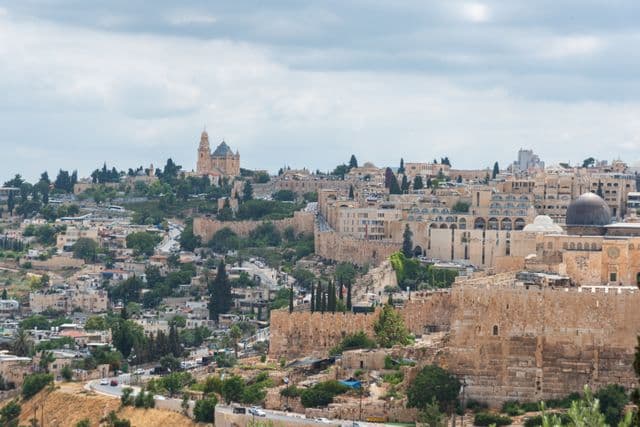
About Israel
Israel compresses more consequence per square kilometer than almost anywhere on earth: the world's densest startup ecosystem outside Silicon Valley, three faiths' holiest geography inside one walled square kilometer of Jerusalem, a Mediterranean beach city in Tel Aviv that runs on espresso and product launches, and a security reality that this page will state plainly rather than write around, because the honest version is the useful one.
The paperwork tier is simple where conditions allow. Citizens of roughly 96 visa-exempt countries, the US, UK, EU states, Canada and Australia among them, enter for 90 days on the B/2 visitor tier with a mandatory ETA-IL electronic authorization, introduced January 2025: 25 shekels, about seven dollars, applied online at least 72 hours before flying, verified by airlines at check-in, with entry itself decided at the border where questions run more thorough than the European norm and a blue entry slip replaces the passport stamp Israel abandoned in 2013. There is no digital nomad visa and none is proposed; visitor-status laptop work for foreign employers sits in the familiar quiet tolerance, kept honest by keeping it brief, while Israeli employment runs through employer-sponsored B/1 work visas, the tech sector's expert-visa lanes, and, for the eligible, the Law of Return's aliyah machinery with its ten-year exemption on foreign-source income for new immigrants, one of the developed world's most generous arrival regimes. The kibbutz volunteer program, the original work exchange, still runs through its official Tel Aviv office, security situation permitting.
The 2026 security file, dated and plain: the US advisory holds Level 3, Reconsider Travel, with Level 4 zones at Gaza, its perimeter and the northern border areas; the spring hostilities closed Ben Gurion entirely until the ceasefire, and the airport fully reopened on April 9 with Israeli carriers, El Al, Arkia, Israir, running full schedules; missile exchanges recurred June 7-8 under a fragile ceasefire; European carriers are returning on a rolling basis, Aegean first on April 28 and more from July 1, while Delta, United and the Lufthansa group remain suspended into autumn, making Athens the practical connection hub; and standard travel insurance frequently excludes acts of war, so specialist policies are part of the arithmetic. Daily life in Tel Aviv and Jerusalem runs with the resilience that surprises every first visitor, cafés full, beaches busy, the Home Front Command app on every phone, shelter rooms built into apartments by code, and the red-alert discipline as ordinary as weather sense. The frame beneath it holds the country's permanent draws: near-universal English in professional life, Sheba and Hadassah anchoring world-rank medicine, the Shabbat rhythm structuring the week from Friday sundown, and a directness culture, dugri, that makes Israeli professional life the least ambiguous in this index. This page is a snapshot taken 21 August 2026 of a situation that moves week to week; the advisories, your airline and your insurer outrank it, and the sensible reader checks all three before booking anything.
Widening the search? If you are looking to expand your job hunt across Eastern Mediterranean, take a look at Cyprus →, Greece →, and UAE →.
Cost of living
Israel prices as a rich country with Tel Aviv at the summit: the city ranks among the world's most expensive, one-bedrooms in the neighborhoods professionals want, the old north, Florentin, the Rothschild spine, running 6,500 to 9,500 shekels monthly (roughly 1,750 to 2,600 dollars), while Jerusalem runs a solid third cheaper, Haifa cheaper again, and the periphery cheaper still. The rental market moves fast on Facebook groups and Yad2, standard leases want post-dated checks or a guarantor, and the mamad shelter room built into modern apartments is both building code and a genuine amenity worth asking about.
Daily life prices at the northern-European tier with Mediterranean compensations: the supermarket bill stings, the 12-to-18-shekel espresso economy is non-negotiable culture, hummus-and-falafel counters feed honestly at 25-to-40 shekels, the shuk markets, Carmel in Tel Aviv, Mahane Yehuda in Jerusalem, price produce fairly and function as social infrastructure, and the business-lunch fixed menus are the value play. The practical lines: the Rav-Kav transit card covers buses, light rail and trains cheaply, the Tel Aviv-Jerusalem train runs about 35 minutes, fiber and 5G are excellent and priced fairly at 80-to-120 shekels, and the war-exclusion insurance question adds a real line item that standard policies dodge. The comfortable single professional life assembles at 3,000 to 3,900 dollars in Tel Aviv and meaningfully less in Jerusalem or Haifa, the shared-flat floor sits near 2,100 in the center, and the honest Israeli additions are the Shabbat-eve dinner economy a well-integrated guest happily joins, the weekend-in-the-desert habit, and the specialist insurance the 2026 file demands.
- Pick the city as the budget decision: Tel Aviv runs world-summit prices, Jerusalem a third lighter, Haifa lighter again; the train makes mixing them practical.
- Work the shuk and the fixed menu: Carmel and Mahane Yehuda price produce fairly, the business-lunch menus are the restaurant value play, and the hummus counter is the honest daily tier.
- Budget the insurance line properly: standard travel policies frequently exclude acts of war; specialist cover exists, costs real money, and is not the line to economize on in 2026.
- Ask about the mamad: the reinforced shelter room is building code in modern stock, a genuine amenity in the current file, and a fair question at every viewing.
Cost-of-living calculator
See how your budget stretches in Israel.
Estimates use approximate exchange rates and typical monthly costs. Your actual costs will vary.
Visas & Entry
Israel's entry tier is simple where conditions allow and thorough at the desk. Citizens of roughly 96 visa-exempt countries enter for 90 days on the B/2 visitor tier with a mandatory ETA-IL: introduced January 1, 2025, applied online at israel-entry.piba.gov.il for 25 shekels at least 72 hours before flying, verified by airlines before boarding, valid as a pre-screening rather than a visa, with the border officer holding the actual decision and the questioning running more thorough than the European norm, purpose, accommodation, onward ticket, answered plainly. A blue entry slip replaces the passport stamp abandoned in 2013, worth guarding for hotels and checkpoints, and extensions beyond 90 days run through the Population and Immigration Authority with declining generosity.
There is no digital nomad visa and none is proposed. Visitor-status remote work for foreign employers sits in the quiet-tolerance category this index knows well, kept honest by keeping it brief and foreign-facing; Israeli employment requires the employer-sponsored B/1 work visa with its labor-market tests, the tech sector runs expert and HIT (high-tech) visa lanes that move faster for the qualified, academia and medicine carry their own permits, and the volunteer tier has its own machinery. The deepest lane is the one unique to this page: the Law of Return entitles Jews, their children, grandchildren and spouses to immigrate, and the aliyah package includes the developed world's most generous arrival regime, a ten-year exemption on foreign-source income for new immigrants, an absorption basket, and citizenship essentially on arrival, which makes Israel, for the eligible remote worker, one of the most tax-interesting moves in this index. The 2026 operational note belongs in the visa section because it governs everything: flights are the constraint, not paperwork, Israeli carriers run full while several Western majors stay suspended into autumn, Athens is the practical hub, and every booking deserves a direct airline confirmation in the current file.
- File the ETA-IL at least 72 hours out: approval is usually fast but manual reviews happen, airlines verify before boarding, and the 25-shekel fee is the cheapest line in the entire trip.
- Answer the border plainly: the questioning is thorough by design, purpose-accommodation-onward-ticket answered directly is the entire technique, and the blue entry slip that follows is worth guarding all trip.
- Confirm every flight directly with the airline: schedules are resuming week by week in 2026, cancellations cluster when the file heats, and the Athens connection is the practical fallback.
- Keep visitor laptop time foreign-facing: foreign employers and clients only, briefly and quietly; Israeli-source work moves everything to the B/1 lane and its sponsor machinery.
- Check Law of Return eligibility seriously if it might apply: the ten-year foreign-income exemption plus immediate citizenship is this index's most generous arrival regime, and eligibility runs wider than many assume.
- Buy insurance that covers the actual file: standard policies frequently exclude acts of war; specialist cover exists and is part of the honest 2026 packing list.
| Visa or permit | What it covers |
|---|---|
| ETA-IL electronic authorization | Mandatory since January 2025 for all visa-exempt nationals including the US, UK, EU, Canada and Australia: 25 shekels at israel-entry.piba.gov.il, at least 72 hours ahead, airline-verified at check-in, and a pre-screening rather than a visa; the border officer decides entry. |
| B/2 visitor tier, 90 days | The standard tourist entry for visa-exempt nationals: 90 days, no stamp since 2013 but a blue entry slip to guard, thorough but professional border questioning, and extensions through the Population and Immigration Authority with declining generosity. |
| Remote work on visitor status | No formal recognition and no prohibition machinery: foreign-employer laptop time sits in the quiet tolerance familiar across this index, kept honest by staying brief and foreign-facing; Israeli clients or employment change the answer immediately. |
| B/1 work visas and the tech lanes | Israeli employment runs through employer-sponsored B/1 permits with labor-market tests; the high-tech sector's expert and HIT visa lanes move faster for qualified engineers and specialists, reflecting where the economy's gravity sits. |
| The Law of Return and aliyah | Jews, their children, grandchildren and spouses may immigrate with citizenship essentially on arrival, an absorption package, and a ten-year exemption on foreign-source income, the developed world's most generous arrival regime and, for eligible remote workers, this index's most tax-interesting move. |
| Student, volunteer and clergy lanes | A/2 student visas serve the university and yeshiva tiers, the volunteer machinery serves the kibbutz and NGO economy, and clergy permits serve the holy geography; each with its own sponsor-driven process. |
| The 2026 operational file | Flights, not paperwork, are the constraint: Ben Gurion fully reopened April 9 after the ceasefire, Israeli carriers run full schedules, European carriers return on a rolling basis while Delta, United and the Lufthansa group stay suspended into autumn, and Athens is the practical connection hub. |
Good to know: NO DNV (none proposed). ETA-IL mandatory since Jan 1 2025 for ~96 visa-exempt nationalities (US/UK/EU/CA/AU): ₪25 (~$7-8) at israel-entry.piba.gov.il, ≥72h ahead, airline-verified at check-in, pre-screening not visa (border officer decides); B/2 = 90 days; NO passport stamp since 2013 → blue entry slip (guard it); thorough border questioning = normal. Visitor remote work = quiet tolerance (foreign-facing, brief); Israeli employment → B/1 employer-sponsored; tech expert/HIT lanes faster; LAW OF RETURN: Jews + children + grandchildren + spouses → citizenship ~on arrival + 10-YEAR FOREIGN-SOURCE INCOME EXEMPTION for new olim (most generous arrival regime in index; 2025-26 reforms trimmed reporting exemptions; details via Nefesh B'Nefesh/tax counsel). 2026 OPERATIONAL FILE: Ben Gurion CLOSED during spring hostilities → FULLY REOPENED Apr 9 2026 post-ceasefire (Israel-Iran); Jun 7-8 missile exchanges, ceasefire fragile; El Al/Arkia/Israir full schedules; Aegean back Apr 28, rolling resumptions Jul 1; Delta/United/Lufthansa group suspended into autumn (Delta ~thru Sep 5+); Iberia/Brussels thru Oct 24; ATHENS = practical hub; summer congestion + delay clusters at TLV; confirm every flight w/ airline directly. Feb 27 2026 authorized departure of non-emergency US personnel was in effect earlier in the year; check current advisory text.
EnRoute Jobs AI tool
Route Planner
Map visa routes, timelines, and relocation costs for your next destination.
Work & Legal
Israeli professional culture is the startup nation cliché made daily and real: the highest density of startups and venture capital per capita on earth, a technical talent pool forged partly in the military's elite units, and a professional register, dugri, directness as respect, that makes Israeli work life the least ambiguous in this index. Meetings start with argument and end with alignment, hierarchy flattens under the force of the better idea, chutzpah is a professional virtue, and the feedback arrives unwrapped; northern Europeans need a week to stop flinching and a month to start preferring it. English is near-universal in tech and professional life, the ecosystem centers on Tel Aviv's Rothschild-to-Sarona spine with Herzliya and Jerusalem's biomed cluster as satellites, and the coworking economy that WeWork's Israeli founders exported runs deep at home, Mindspace being the homegrown flagship.
The legal lines are the visa section's: foreign-facing laptop work on visitor status, briefly and quietly; Israeli-source work through the B/1 machinery. The rhythm is the distinctive part: the week runs Sunday through Thursday, Friday is the half-day everyone actually spends at the shuk, and from Friday sundown to Saturday night the Shabbat quiet settles, transit stops in most cities, Tel Aviv keeps a secular pulse while Jerusalem genuinely rests, and the Friday-night dinner table is the country's true social institution, joined gratefully whenever invited. The calendar adds Rosh Hashanah and Yom Kippur, when the country fully stops, and Passover week's own texture. The time zone at UTC+2 holds Europe fully in-hours and catches the US East Coast afternoon, the cafés treat laptops as furniture, and the operational note of 2026 belongs here too: the Home Front Command app sits on every working phone, the red-alert pause is handled with a calm that startles newcomers, and the resilience of ordinary professional life is itself the most Israeli thing a visitor will witness.
- Take the directness as respect: dugri feedback arrives unwrapped, argument is the meeting's working style, and matching the candor warmly is the entire integration technique.
- Plan the Sunday-Thursday week: Friday is the half-day at the shuk, Shabbat quiets the country from sundown, and the Friday-night dinner invitation is the one always worth accepting.
- Keep the visa line clean: foreign clients on visitor status, briefly; Israeli-source work runs through B/1 sponsorship, and the tech lanes move fast for the qualified.
- Work the UTC+2 position: Europe fully in-hours, the US East Coast across the afternoon, and the café-and-coworking economy, Mindspace at its center, built for exactly this.
Good to know: Startup nation real: highest startup + VC density per capita; talent pipeline partly military elite units (8200 etc.); DUGRI directness = respect (argument = working style, chutzpah = virtue); English near-universal in tech; Rothschild-Sarona spine + Herzliya + Jerusalem biomed; Mindspace = homegrown coworking flagship (WeWork's founders Israeli). Week = SUN-THU; Fri half-day; Shabbat Fri sundown→Sat night (transit stops most cities; TLV secular pulse, Jerusalem rests); Rosh Hashanah/Yom Kippur = full stop; Friday-night dinner = the institution. Home Front Command app on every phone; red-alert pause handled calmly. Visitor work = foreign-facing + brief; B/1 for Israeli-source.
Taxes
Israeli tax runs a worldwide residence system with the developed world's most generous new-immigrant regime beside it, and the American file keeps its treaty but not its totalization.
| What applies | The rule in 2026 |
|---|---|
| The residency tests | Residence follows the center-of-life test, home, family, economic ties, backed by day-count presumptions: 183 days in a year, or 30 days plus 425 across three years, raise the presumption; the substance test decides close cases, and planning beats improvising. |
| Residents and the schedule | Worldwide income at progressive rates from 10 to 47 percent, plus a 3 percent surtax on high incomes taking the top effective rate to 50; national insurance (Bituach Leumi) and health contributions run beside the income schedule. |
| The visitor's clean position | Inside the 90-day tier with foreign-source income and no Israeli clients, the short-stay professional owes Israel nothing; Israeli-source work is taxable from the first shekel and moves the visa file with it. |
| The new-immigrant regime | New immigrants under the Law of Return receive a ten-year exemption on foreign-source income and gains, the developed world's most generous arrival package; recent reforms have trimmed the parallel reporting exemptions, so current counsel governs the details. |
| The self-employed and local business | Israeli-source freelancing runs through osek patur or osek murshe registration, VAT at 18 percent for the registered tier, and the full domestic machinery, none of which the compliant foreign-facing visitor touches. |
| Capital and investment | Capital gains generally at 25 percent, 30 for substantial shareholders, with the surtax above thresholds; the startup economy's option culture carries its own detailed regime worth specialist advice. |
| Americans specifically | A US income-tax treaty stands but no totalization agreement exists, so self-employment tax runs unshielded on American freelancers; the FEIE and credits handle the income layer, and the new-immigrant exemption interacts with US citizenship-based taxation in ways only a cross-border preparer should navigate. |
| The home-country half | An Israeli season changes nothing at home by itself, and an aliyah move changes everything deliberately: the exemption decade, the treaty map and the home-country exit rules want planning together, before the flight rather than after. |
Verified 21 August 2026: the center-of-life residence test with its day-count presumptions, the 10-to-47 schedule with the surtax to an effective 50, VAT at 18 percent, the ten-year new-immigrant exemption on foreign-source income with recently trimmed reporting exemptions, the 25-to-30 capital-gains tier, and the standing US treaty without a totalization agreement. General information, not tax advice.
Good to know: Center-of-life test + presumptions (183 days; or 30 + 425 over 3 yrs); worldwide 10-47% + 3% surtax → 50% effective top; Bituach Leumi + health beside; VAT 18% (since Jan 2025); visitor foreign-income clean inside 90 days; NEW-IMMIGRANT REGIME: 10-yr exemption on foreign-source income + gains for olim (reporting exemptions trimmed by recent reforms; counsel governs); osek patur/murshe for local business; CGT 25% (30% substantial); US treaty ✓ (1995) totalization ✗ (SE tax unshielded); aliyah + US citizenship-based tax = cross-border preparer territory.
Healthcare
Israeli healthcare is world-rank at the top and universal for residents underneath: Sheba Medical Center at Tel HaShomer ranks among the world's top hospitals year after year, Hadassah's Jerusalem campuses, Tel Aviv's Sourasky (Ichilov) and Haifa's Rambam anchor a national tier whose trauma and emergency medicine, for the sobering reasons the file explains, rank with the best on earth, and the resident system runs through four competing kupot holim health funds under universal national insurance. For visitors the translation is private and manageable: care is excellent, English-capable throughout, private consultations run 300-to-600 shekels, and the 2026 insurance caveat is the section's headline, standard travel policies frequently exclude acts of war, so specialist coverage that holds under the actual file is the non-negotiable line.
The everyday tier is strong: Terem urgent-care clinics handle the walk-in tier efficiently, pharmacies (Superpharm's network foremost) run capable counters, telehealth is mature, and the tap water is safe everywhere. The health syllabus is Mediterranean-plus-security: summer heat asks real hydration discipline, especially in the desert and Dead Sea geography where hiking claims the unprepared, the beach file runs rips and jellyfish seasons, and the security layer adds its own line, the Home Front Command app's shelter guidance is health equipment in 2026, and proximity-to-shelter awareness is the local habit worth adopting immediately. Emergencies answer at 101 for Magen David Adom ambulances, 100 for police and 102 for fire, response is world-standard, and the honest summary is the split the country lives: medicine that ranks with the world's best, reached in 2026 through an insurance file that must be built for the situation as it is.
- Build the insurance for the actual file: standard policies frequently exclude acts of war, specialist cover exists and prices the reality, and this is the one line the 2026 packing list does not economize.
- Use Terem as the visitor's door: the urgent-care network handles the everyday efficiently in English, private consultations run 300-to-600 shekels, and the hospital tier is for the serious file.
- Respect the heat and the desert seriously: summer hydration discipline is genuine safety equipment, the Dead Sea and Negev hiking file claims the unprepared, and the early-start habit is the local wisdom.
- Install the Home Front Command app on arrival: the shelter guidance is health equipment in the current file, the red-alert discipline is learned in a day, and proximity awareness becomes background quickly.
| Hospital | What to know |
|---|---|
| Sheba Medical Center, Tel HaShomer | Israel's flagship and a perennial world top-ten ranking: full-spectrum depth from oncology to rehabilitation, with international-patient machinery and research medicine's weight. |
| Hadassah Medical Center, Jerusalem | The Ein Kerem and Mount Scopus campuses anchor Jerusalem's tier: university medicine, the region's referral depth, and English-capable coordination throughout. |
| Sourasky (Ichilov), Tel Aviv | The city-center anchor steps from the professional district: the practical serious-care address for the Tel Aviv-based, with emergency depth to match. |
| Rambam Health Care Campus, Haifa | The north's anchor, including the underground emergency hospital built for exactly the contingencies the file describes; trauma medicine at world rank. |
| The kupot and Terem tier | Residents run through four competing health funds under universal insurance; visitors use the Terem urgent-care network and private clinics at 300-to-600-shekel consultations, English-capable throughout. |
| Emergency architecture | 101 reaches Magen David Adom with world-standard response, the trauma system ranks with the best on earth, and the Home Front Command app's shelter guidance is 2026's honest addition to the health kit. |
Hospital list compiled 21 August 2026 and not yet confirmed against each facility directly. Treat as indicative and verify before relying on it.
Good to know: World-rank top (Sheba = perennial world top-10; Hadassah Jerusalem; Sourasky/Ichilov TLV; Rambam Haifa incl. underground emergency hospital); trauma/emergency medicine = world's best tier; residents = universal via 4 kupot holim; visitors = private (₪300-600 consults, English throughout) + Terem urgent-care network; INSURANCE HEADLINE: standard policies frequently EXCLUDE acts of war → specialist cover = non-negotiable 2026 line; heat/desert/Dead Sea hiking discipline; Home Front Command app = health equipment; 101 MDA / 100 police / 102 fire.
Safety
Israel's 2026 safety file is the most serious in this index and the page holds it plainly, in both halves: the conflict file that drives the advisories, and the street file that surprises every visitor by how calm it is. The official half: the US advisory holds Level 3, Reconsider Travel, citing armed conflict, terrorism and civil unrest, with Level 4 Do Not Travel at Gaza and its perimeter and the northern border areas, and the UK, Canada and Australia running equivalent registers with matching zone carve-outs; earlier in 2026 the State Department authorized departure of non-emergency personnel, the spring hostilities closed Ben Gurion until the April 9 reopening, and missile exchanges recurred June 7-8 under a fragile ceasefire, which is the honest context every plan starts from.
The lived file, stated with equal honesty: ordinary street crime runs low by any Western comparison, Tel Aviv and Jerusalem daily life proceeds with a resilience that startles first visitors, and the practical machinery is the distinctive part, the Home Front Command app delivering red alerts by location, shelter rooms (mamad) built into modern apartments by code, public shelters signposted, and a population whose alert discipline is as ordinary as weather sense: when the siren sounds, you move, you wait the prescribed minutes, you resume. The register to respect: security presence is heavy and professional, bag checks at stations and malls are routine, photography near security infrastructure is unwise, demonstrations are events to walk away from, and the geography matters absolutely, the Level 4 zones are real lines rather than suggestions, the West Bank carries its own advisory tier and checkpoint machinery, and Jerusalem's Old City asks situational awareness at friction points and prayer-time crowds. The environmental tier runs Mediterranean, summer heat with real force, desert-hiking discipline, beach rips and jellyfish seasons, and earthquakes as a background file along the Jordan Rift. Emergencies answer at 100, 101 and 102, response is world-standard, and the honest summary is the split itself: a country whose streets are calmer than its headlines and whose headlines are serious, navigated by the app, the zones, and the week-to-week check this page's date stamp demands.
- Start every plan from the advisory text, dated today: the file moves week to week, the Level 4 zones are real lines, and the sensible reader checks the advisories, the airline and the insurer before booking anything.
- Install the Home Front Command app before landing: location-based red alerts, shelter guidance and the prescribed wait times are the country's actual safety infrastructure, learned in a day and carried like weather sense.
- Learn the shelter map of your daily geography: the mamad in modern apartments, the signposted public shelters, and the stairwell rule in older stock; proximity awareness is the local habit worth adopting immediately.
- Respect the security register: heavy professional presence, routine bag checks, no photography near installations, and every demonstration walked away from; the discretion is the entire technique.
- Treat the zone geography absolutely: Gaza's perimeter and the northern border are advisory Level 4, the West Bank carries its own tier and checkpoint machinery, and the Old City's friction points ask situational awareness at crowded hours.
- Keep the environmental file too: summer heat with real force, desert-hiking discipline and early starts, beach rips and jellyfish seasons, and 100-101-102 as the emergency numbers with world-standard response.
Official travel advisories
| Government | Current position |
|---|---|
| United States | Level 3, Reconsider Travel, for armed conflict, terrorism and civil unrest, with Level 4 Do Not Travel at Gaza, its perimeter and northern border areas; the advisory text moves with events and outranks every guide.travel.state.gov → |
| United Kingdom | Advises against travel to the specified zones with heightened-risk guidance for the remainder; the FCDO text carries the operational detail British travelers should read in full.gov.uk → |
| Canada | Avoid non-essential travel overall with regional avoid-all-travel zones; the demonstration-avoidance and shelter-awareness notes carry the practical content.travel.gc.ca → |
| Australia | Reconsider-your-need-to-travel register with do-not-travel zones, the missile-risk context stated plainly, and insurance-validity warnings worth taking literally.smartraveller.gov.au → |
| US Embassy Jerusalem | Enroll in STEP without fail here: the mission's security alerts are the operational feed for the current file, and the Tel Aviv branch office serves the coastal plain. 14 David Flusser Street, Jerusalem; +972 2 630 4000.il.usembassy.gov → |
Advisory positions verified 21 August 2026 as a dated snapshot: the US Level 3 with Level 4 zones, the UK, Canadian and Australian equivalents, the spring closure and April 9 reopening of Ben Gurion, the June 7-8 exchanges under a fragile ceasefire, the low street-crime register beside the conflict file, and the app-and-shelter machinery of daily life. This file moves week to week; open the sources before travelling and again before booking.
Good to know: MOST SERIOUS FILE IN INDEX, held plainly in both halves: US L3 Reconsider (armed conflict/terrorism/civil unrest) + L4 = Gaza + perimeter + northern border; UK/CA/AU equivalents w/ zone carve-outs; Feb 27 2026 authorized departure of non-emergency US personnel earlier in year; spring hostilities closed Ben Gurion → reopened Apr 9; Jun 7-8 missile exchanges, ceasefire fragile. STREET HALF: ordinary crime LOW by Western comparison; TLV/Jerusalem daily life resilient. MACHINERY: Home Front Command app (location red alerts), mamad shelter rooms = building code, public shelters signposted, siren discipline = weather sense. Register: heavy professional security presence, routine bag checks, NO photography near installations, walk away from demonstrations; West Bank = own tier + checkpoints; Old City friction points. Environmental: heat, desert-hiking discipline, rips/jellyfish, Jordan Rift earthquake background. 100 police / 101 MDA / 102 fire. Score 45 (below India 50 on active-conflict file). WEEK-TO-WEEK VOLATILITY = the page's own headline.
Climate
Israel runs three climates in a country crossable in a morning: the Mediterranean coast, Tel Aviv and Haifa, does the classic dry-summer year, humid-hot Junes through Septembers at 27-32 degrees, mild bright winters at 10-18 with rain in bursts, and a sea swimmable May through November; Jerusalem's highland perch runs cooler and drier, crisp winters that occasionally snow, summer evenings that want a layer, and a light the city's photographers built careers on; and the southern half is genuine desert, the Negev and the Dead Sea shelf running 35-plus summers where hiking is a dawn discipline and winter is the season the wadis were made for. The working calendar writes itself: March-May and October-November are the national prizes, spring painting the north green and autumn cooling the desert open; high summer argues for the coast's sea breeze and the air-conditioned café economy; and winter is the secret season, mild coastal workdays, Jerusalem's moody clarity, and the desert at its walkable best. The kit is Mediterranean-light with one Jerusalem layer and serious sun discipline, and the deepest climate fact is the compression: beach morning, highland afternoon and desert sunset are one day's honest itinerary.
| Season | What to expect |
|---|---|
| The prizes, March-May and October-November | Spring's green north and wildflower window, autumn's cooled desert and golden light: the working weather at its best everywhere at once, and the calendars every plan should orbit. |
| Summer, June to September | The coast humid-hot at 27-32 with the sea as compensation, Jerusalem warm-dry with cool evenings, and the desert at 35-plus where dawn is the only hiking hour; the café air-conditioning economy earns its keep. |
| Winter, December to February | The secret season: coastal workdays at 10-18 with rain in bursts, Jerusalem crisp with occasional snow drama, and the Negev and Dead Sea at their walkable best. |
| The regional signatures | Tel Aviv's November-swimmable sea, Jerusalem's highland light and rare snows, the Dead Sea's below-sea-level warmth, and the one-day compression of beach, highland and desert. |
Good to know: Three climates crossable in a morning: coast = dry-summer Mediterranean (swim May-Nov; summer 27-32 humid; winter 10-18 rain-bursts); Jerusalem = highland (cooler-drier, crisp winters, occasional snow, evening layer); south = true desert (Negev/Dead Sea 35+ summers, dawn hiking discipline, winter = wadi season). Prizes = Mar-May + Oct-Nov; winter = secret season; compression = beach AM, highland PM, desert sunset in one day.
Culture & Customs
Israeli culture runs at full volume on a small stage: the directness, dugri, that treats candor as respect, a hospitality that fills your plate before asking, an argument culture where debate is affection, and a resilience register that keeps café terraces full through headlines that would empty them anywhere else. The week's architecture is the deepest layer: Friday afternoon's shuk crush dissolves into Shabbat's quiet from sundown, the Friday-night table, candles, challah, courses, arguments, is the country's true social institution and the invitation always worth accepting, and Saturday night reopens the country with a collective exhale. The religious spectrum shares every street: secular Tel Aviv and observant Jerusalem are cliché-true and incomplete, Haredi, national-religious, traditional and secular lives interleave block by block, and the visitor's skill is reading each block's register, covered shoulders and quiet in religious quarters, anything-goes on the Tel Aviv beachfront.
The codes worth carrying: dress modestly at holy sites with coverings provided or required, photograph people and security infrastructure only with clear permission, treat the political and the conflict-adjacent as territory locals may raise and visitors should receive rather than initiate, learn the calendar's full stops, Yom Kippur silences even the roads, Rosh Hashanah closes the week around it, Passover re-textures the bread aisle, and tip 10-to-15 percent where service lives. The table is the argument that needs no translation: hummus theology by neighborhood, the shuk's produce liturgy, shakshuka mornings, the grill-and-salatim spread, Yemenite, Iraqi, Moroccan, Ashkenazi and Levantine kitchens sharing one street, and a natural-wine-and-third-wave scene Tel Aviv runs at world level. Hebrew opens doors with ten words, shalom, toda, b'vakasha, Arabic is the second tongue of the land, English carries professional life, and the professional who accepts the Friday invitation, matches the candor warmly, reads each block's register and lets the argument culture include them has read the country correctly: Israel decides quickly that you are family, and argues with you accordingly.
- Accept the Friday-night invitation, always: the Shabbat table is the country's true institution, the courses and arguments are the point, and bringing wine or flowers is the entire protocol.
- Match the dugri register warmly: the candor is respect, the interruption is engagement, and the visitor who argues back with a smile has been accepted rather than offended.
- Read each block's dress and volume code: covered and quiet in religious quarters, beachfront-casual in Tel Aviv, and the transition can happen in a hundred meters; the awareness is the courtesy.
- Learn the calendar's full stops: Yom Kippur silences the roads entirely, Rosh Hashanah closes its week, Shabbat stops transit in most cities, and planning around them is respect and logistics at once.
- Keep the visitor's discretion on the conflict: locals may raise it and hold every view at once; receiving rather than initiating is the register that travels, and the demonstration is always walked away from.
- Eat across the map deliberately: hummus theology by neighborhood, the shuk liturgy, and the Yemenite-Iraqi-Moroccan-Levantine spectrum on single streets; the table is where the country explains itself.
Sponsored
Insurance built for life on the move
SafetyWing covers your health and travel wherever work takes you next.

